
Tirzepatide Residual Liquid: Manufacturer Overfill vs. Standard High-Volume Fill
In this article
- 1. Defining the Two Realities: Technical Overfill vs. Standardized Tier Allocation
- 2. Reconstituted Lyophilized Powder vs. Pre-Mixed Liquid Vials
- 3. How to Verify What Is Actually in Your Vial
- 4. Why Consistent Fill Volume and API Accuracy Matter for B2B Buyers
- Direct Synthesis Wholesale & OEM Peptide Solutions by Neropep
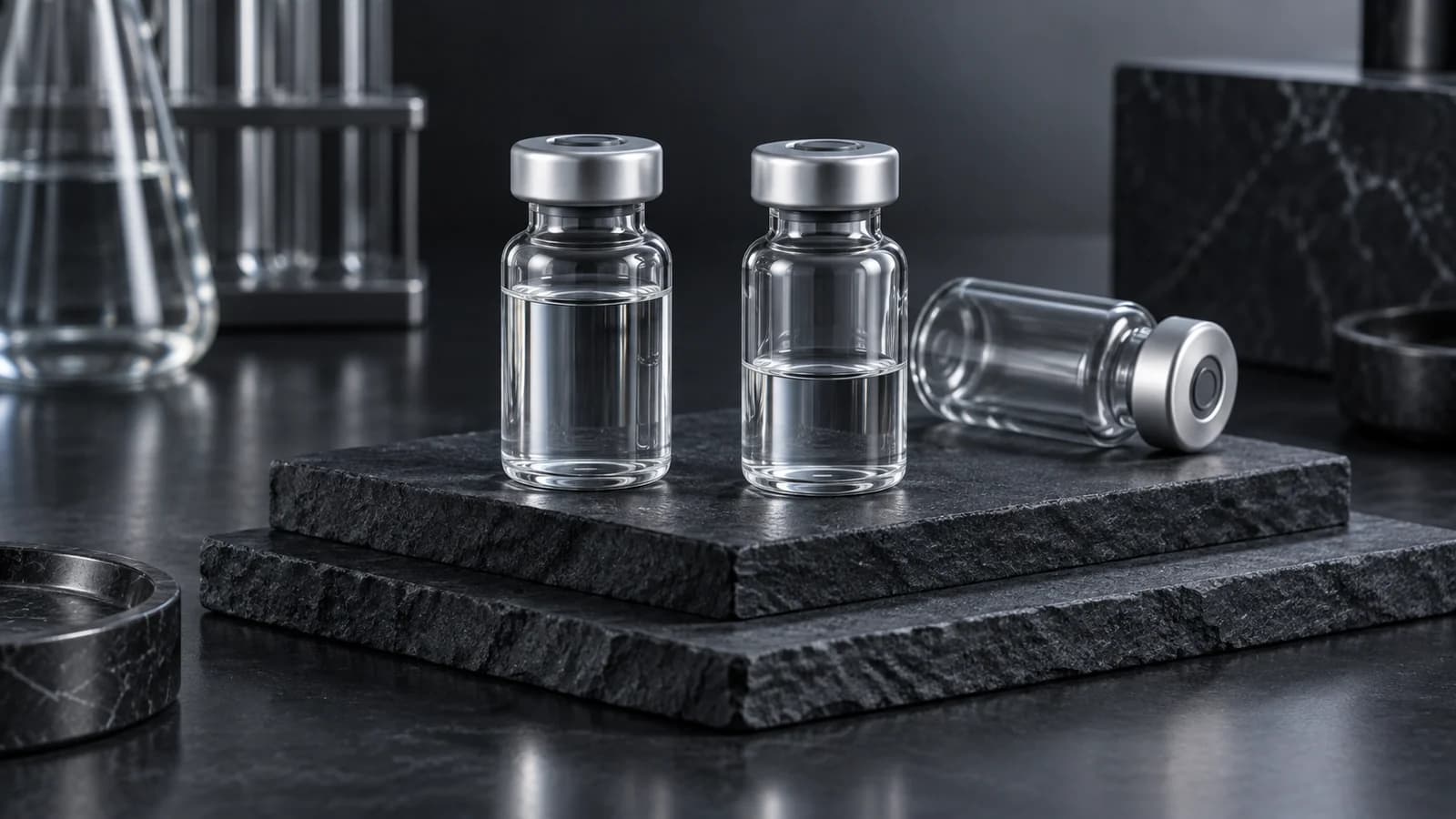
When administering or reconstituting Tirzepatide, clinicians, researchers, and individual buyers frequently observe a noticeable amount of liquid remaining in the vial after all scheduled doses have been withdrawn. A common scenario seen across research forums is finding an apparent "5th dose" in what was designated as a 4-dose vial.
This raises an essential operational question: Is the leftover solution intentional manufacturing overfill, or did you receive a larger standard vial size assigned to fulfill a smaller requirement?
Understanding the distinction between these two mechanisms is critical for precise dosage control, protocol integrity, and inventory budgeting. Below is an authoritative technical breakdown of how vials are filled, how compounding and research-grade peptide manufacturing handle batch volumes, and how to verify exact peptide content.
1. Defining the Two Realities: Technical Overfill vs. Standardized Tier Allocation
The visual excess in a vial generally stems from one of two distinct practices:
Swipe or scroll to compare all columns.
| Parameter | USP / Technical Overfill | Standardized Tier Allocation (Larger Vial Fill) |
|---|---|---|
| Primary Intent | Compensate for physical dead space in needles, hubs, and vial walls | Fulfill custom or intermediate targets using mass-produced standardized runs |
| Typical Volume / Mass | ~5% to 15% extra volume (usually 0.1 mL – 0.3 mL) | Often 20% to 50%+ surplus (e.g., an entire extra dose of 2.5 mg – 10 mg) |
| Standard Guideline | USP <1151> (Pharmaceutical Dosage Forms – Injections) | Standard batch compounding / mass formulation economics |
| Peptide Mass Content | Lyophilized powder mass strictly matches the label (plus minor standard synthesis margin) | Total API mass inside the vial corresponds to a higher batch standard |
Mechanism A: USP <1151> Mechanical Overfill
In any liquid reconstitution or pre-mixed multidose vial, viscous adherence occurs. When a syringe draws liquid, a measurable fraction stays behind in:
- The needle dead space (the hub connecting the cannula to the barrel).
- The inner glass surface tension and the rubber stopper neck.
To ensure that a user who purchases a nominal volume can actually extract the declared amount, manufacturers apply standard overfill tolerances. This intentional cushion is engineered so that five nominal draws do not fall short on the fifth extraction. However, true technical overfill rarely yields a complete extra high-concentration dose; it typically accounts for a fraction of a milliliter.
Mechanism B: Standardized Tier Allocation
Compounding facilities and contract manufacturers do not run custom batch lines for every incremental prescription or protocol increment. Instead, they synthesize and bottle standardized volumes (for example, fixed master batch runs of 20 mg, 40 mg, 60 mg, or 72 mg vials).
If an order calls for a 50 mg total protocol, dispensing facilities frequently supply a standard 60 mg or 72 mg vial rather than recalibrating automated fill lines. Consequently, what appears to the end user as an "overfilled vial" is simply a standard larger-format unit fulfilling a smaller nominal requirement.
2. Reconstituted Lyophilized Powder vs. Pre-Mixed Liquid Vials
For research institutes, cosmetic clinics, and B2B distributors sourcing lyophilized peptide cakes, volumetric confusion often occurs during reconstitution:
- Lyophilized Vials (API Mass is Fixed):
If you purchase a vial labeled 10 mg Tirzepatide, the absolute quantity of Active Pharmaceutical Ingredient (API) is measured in milligrams, not milliliters. Adding 1.0 mL or 2.0 mL of bacteriostatic water changes the concentration, but the total peptide mass remains anchored to what was synthesized and filled into that glass unit.
- Volumetric Displacement:
Peptide mass occupies physical space. Adding 2.0 mL of diluent to a high-mass lyophilized cake may result in a final volume slightly greater than 2.0 mL (e.g., ~2.05 mL). Failing to account for displacement leads to minor concentration shifts.
- Syringe Dead Space Accumulation:
Standard low-dead-space (LDS) syringes lose roughly 0.002–0.005 mL per draw, whereas conventional high-dead-space syringes can retain up to 0.05–0.08 mL. Over four or five draws, conventional syringes can trap nearly a third of a milliliter inside the discarded hubs, creating the illusion of a shortfall—or leading users with LDS syringes to believe the vial was dramatically overfilled.
3. How to Verify What Is Actually in Your Vial
Relying on visual estimation through the curved glass of a vial is imprecise. To accurately verify your batch parameters:
- Inspect the Master Batch Release / Concentration Label: Check whether the label indicates total volume (mL), concentration (mg/mL), or absolute net peptide mass (mg). Multiply concentration by total fill volume to calculate the actual API contained.
- Review Third-Party Analytical Testing: High-grade direct synthesis manufacturers supply batch-specific documentation. Always examine HPLC (High-Performance Liquid Chromatography) for purity and Mass Spectrometry (MS) / LC-MS for structural confirmation and net peptide content.
- Match Vial Metrics to Batch COAs: You can cross-reference batch numbers against authenticated records on the Neropep COA Verification Portal.
4. Why Consistent Fill Volume and API Accuracy Matter for B2B Buyers
For medical spas, wellness clinics, resellers, and peptide research labs, inconsistent fills introduce operational risks:
- Protocol Inconsistency: In research and clinical tracking, ambiguous active ingredient concentrations disrupt reproducible outcomes.
- Cost Inefficiencies: Paying for custom formulations that simply repurpose mismatching standard units complicates unit-cost economics.
- Client Trust: End customers who notice fluctuating fluid levels or unexpected extra doses may question the quality control and homogeneity of the supply chain.
Direct synthesis eliminates this variance by controlling the fill weight, lyophilization parameters, and container closure integrity at the primary manufacturing level.
Direct Synthesis Wholesale & OEM Peptide Solutions by Neropep
As a dedicated peptide manufacturer operating under Direct Synthesis Wholesale & Contract Manufacturing (OEM) standards, Neropep provides fully characterized, high-purity metabolic peptides with exact fill specifications. Every batch is produced under strict quality control, verified by HPLC and MS analytical profiles to guarantee no ambiguity between fill volume and active mass.
Explore Core Metabolic Formulations
- Tirzepatide Lyophilized Powder: Available in high-purity single-vial and multi-vial bulk configurations for clinic and research needs.
- Retatrutide Research Peptides: Advanced triple-agonist peptide manufactured with precise API quantification.
- Semaglutide Bulk Supply: High-homogeneity GLP-1 receptor agonist for commercial and laboratory applications.
- Full Product Catalog: Complete line of metabolic, anti-aging, and functional research peptides.
OEM, Custom Synthesis & Verification Services
- Contract Manufacturing & Private Labeling: Scale your commercial brand with our Wholesale & Private Label Services.
- Targeted Formulations: Develop custom fill volumes, specific concentrations, or unique peptide blends via Custom Peptide Synthesis and Custom Formulas.
- Quality Assurance: Learn more about our analytical testing standards at Neropep Quality Control.
- Batch Verification: Validate your analytical test reports anytime via our COA Verification System.
Start Your Order or Consultation
Whether you need standardized bulk lots, precise fill volumes for private-label lines, or specialized laboratory orders:
- Submit your technical specifications through our Request a Quote Page.
- Contact our account managers directly via the Contact Form.
- For immediate technical or order assistance, initiate a Live Sales Chat.