
Tirzepatide Package Arrives Warm: Differentiating Lyophilized Powder, Pre-mixed Liquids, and Transit Temperature Records
In this article
It’s a scenario that sparks anxiety across online communities: your highly anticipated peptide shipment arrives, but the package is noticeably warm to the touch. Recently, a Reddit user shared their experience of receiving a pre-mixed Tirzepatide liquid prescription shipped from Arizona in early September—without an ice pack. The outer packaging was hot, leaving the recipient wondering: Is my medication damaged?
For clinic owners, medi-spa operators, researchers, and individual buyers, peptide stability is a paramount concern. But the answers found online—such as "check for floaters or crystals"—are often dangerously incomplete.
As a leader in Direct Synthesis Wholesale & Contract Manufacturing (OEM), Neropep aims to clarify the critical differences between lyophilized powder and pre-mixed liquids, and how to scientifically evaluate transit heat exposure.
Lyophilized Powder vs. Pre-Mixed Liquid: The Stability Divide
The format of the peptide plays the most significant role in its ability to withstand temperature fluctuations during shipping.
1. Pre-mixed Liquids (Compounded) When peptides like Tirzepatide are pre-mixed or compounded into a liquid state, their molecular bonds become highly vulnerable to degradation. Aqueous environments accelerate hydrolysis and oxidation. If a pre-mixed liquid is exposed to extreme heat (like being out for delivery in the Arizona summer for several hours), the degradation curve steepens drastically. Shipping these formulations without proper cold-chain logistics (like ice packs and thermal bubble wrap) is highly risky and often compromises the product's efficacy.
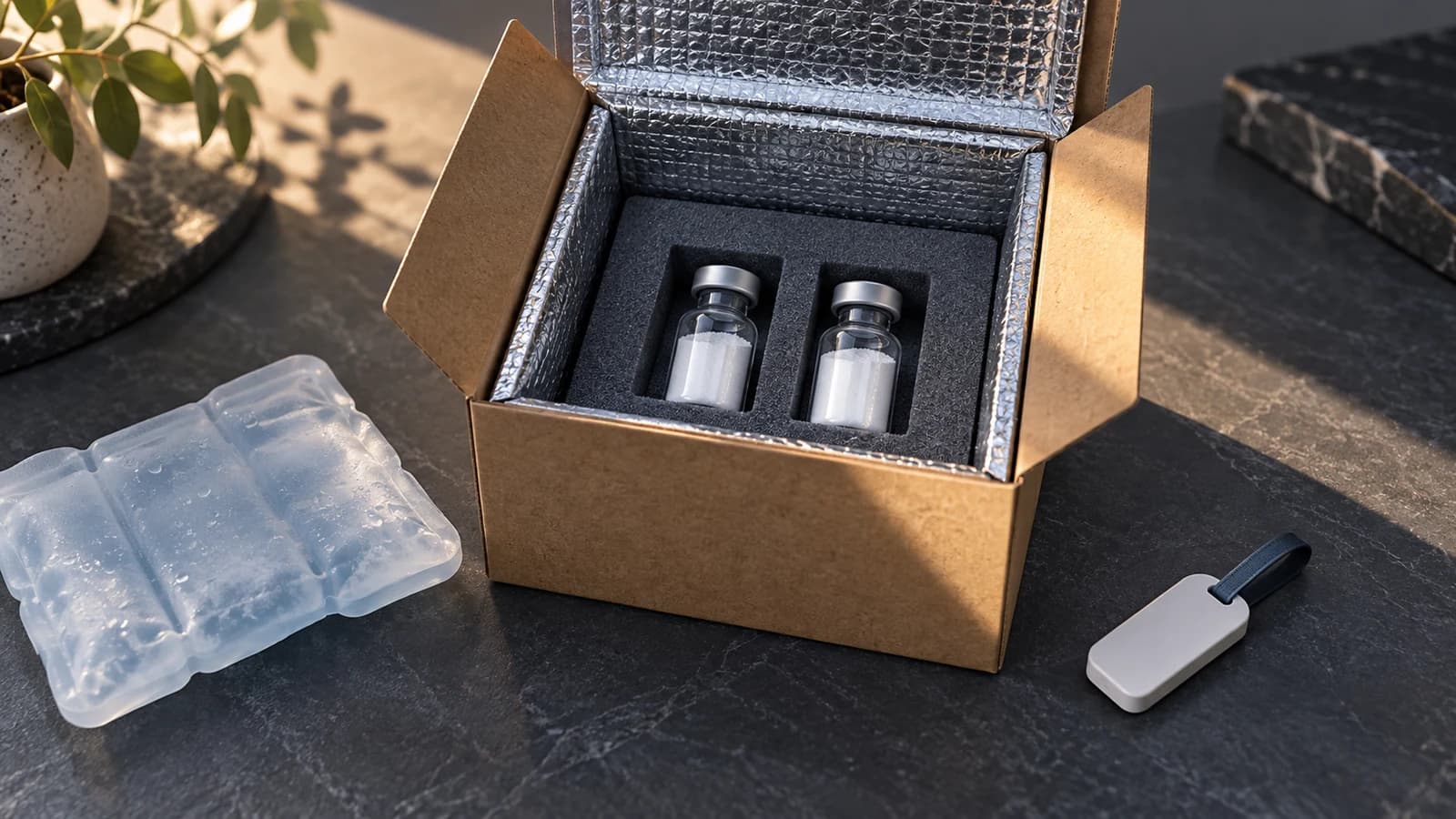
2. Lyophilized Powder (Freeze-Dried) At Neropep, we specialize in high-purity lyophilized peptides. The freeze-drying process removes the water, putting the peptide molecules into a stable, dormant state. Lyophilized peptides are significantly more resilient to temperature variations. While prolonged exposure to extreme heat should always be avoided, standard transit temperatures—even arriving warm in the mail—rarely degrade high-quality lyophilized powder over a typical 3-5 day shipping window.
The Dangerous Myth of the "Visual Check"
A common piece of advice circulating in online forums is to visually inspect the vial. People often believe that if the lyophilized cake looks intact, or if the powder reconstitutes into a perfectly clear liquid without "floaters or crystals," the peptide is completely fine.
This is scientifically false.
Here are the facts you must know for accurate product acceptance:
- Visual Clarity Does Not Equal Molecular Integrity: A peptide can undergo significant degradation (loss of potency or altered molecular structure) and still dissolve perfectly clear.
- Invisible Efficacy Loss: Heat damage often cleaves peptide bonds at a microscopic level. You cannot see a 30% or 50% loss in potency with the naked eye.
- Sterility Risks: For liquids, heat can promote bacterial growth if the original sterility was compromised. A clear liquid does not guarantee a sterile liquid. Visual inspection cannot serve as a safety release or clearance for human use.
How to Properly Assess Heat Exposure and Product Acceptance
If you receive a warm package, visual checks are insufficient. Product acceptance must be based on scientific data and objective records.
- Request Product Stability Data: Legitimate manufacturers conduct accelerated stability testing. You must rely on specific product and batch stability data that indicates how long the exact formulation can survive at specific elevated temperatures (e.g., 25°C, 40°C).
- Transit Temperature Records: For bulk shipments or sensitive formulations, transit data loggers are crucial. Knowing the exact peak temperature and duration of exposure allows you to compare the transit log against the stability data.
- Third-Party Analytical Testing: The ultimate proof of integrity is an analytical test, such as High-Performance Liquid Chromatography (HPLC). At Neropep, our rigorous Quality Control ensures every batch is tested. Customers can confidently Verify COA (Certificate of Analysis) for our products.
The Neropep Advantage: Direct Synthesis & OEM Excellence
Whether you are looking to expand your research catalog or supply your clinic, sourcing directly from a primary manufacturer eliminates the uncertainties of secondary compounding pharmacies.
Neropep offers comprehensive solutions:
- Premium Peptides: From our flagship Tirzepatide, to cutting-edge Retatrutide and trusted Semaglutide, browse our complete Product Catalog.
- Custom Solutions: Need something specific? Explore our Custom Formulas and specialized Custom Peptide Synthesis services.
- B2B Scaling: We empower businesses through our robust Wholesale & Private Label (OEM) program, delivering consistent, stable lyophilized products that survive transit and perform flawlessly.
Stop guessing about your peptide quality. If you are ready to upgrade your supply chain with verifiable data and superior stability, Request a Quote today. Have immediate questions about bulk ordering or shipping protocols? Speak with our team instantly via our Sales Chat or reach out through our Contact Page.