
Beyond the Cap: Why Vial Colors and Missing Batch Tables Fail Peptide Verification
In this article
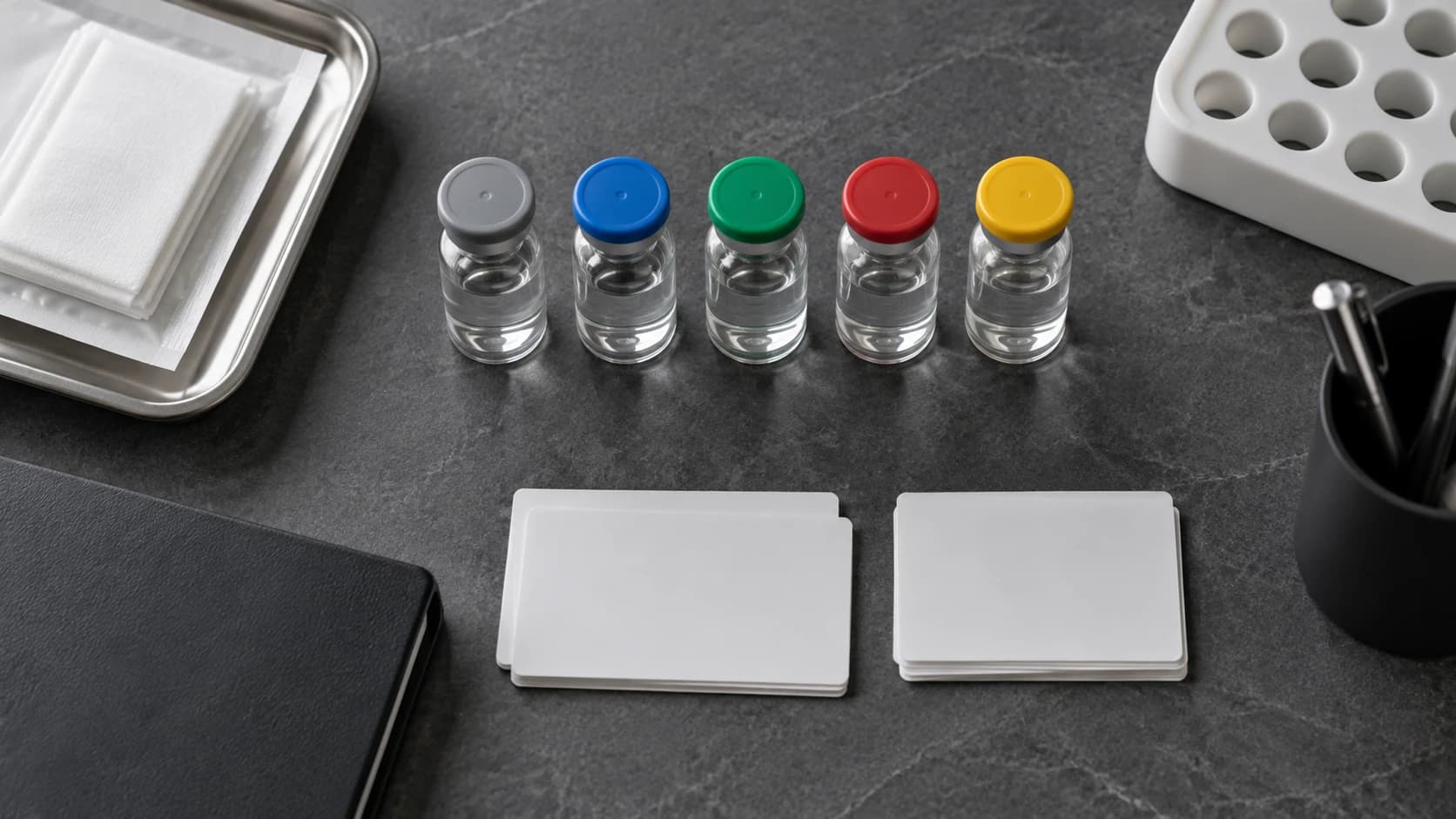
When a shipment of lyophilized Tirzepatide arrives at a clinic, a research laboratory, or a wholesale depot, the immediate visual inspection often begins and ends with the color of the flip-off cap. In secondary peptide markets and online procurement communities, vial cap colors are frequently treated as informal shorthand for strength or supplier identity. Green might be assumed to mean 10mg, blue for 15mg, and red for custom blends. However, relying on plastic cap pigmentation—or attempting to decode supply chains through color coding alone—introduces severe verification risks that compromise quality assurance and inventory safety.
This article examines why cap colors and ad-hoc visual assumptions cannot replace proper labeling, manufacturer batch tracking, and rigorous third-party verification, utilizing real-world procurement challenges to establish objective sourcing standards.
The Allure of Visual Shortcuts and the Reality of Secondary Packaging
In high-volume peptide procurement, buyers naturally look for rapid identification cues. When unpacking bulk vials, distinguishing strengths at a glance speeds up sorting. Yet, unlike branded pharmaceutical supply chains where cap colors and container dimensions are standardized under strict regulatory oversight, the global research peptide market features diverse manufacturers using heterogeneous packaging components.
Flip-off caps, rubber stoppers, and aluminum crimp seals are generic industrial supplies purchased independently from the active pharmaceutical ingredient (API). A manufacturer may utilize green caps for a 10mg batch one month, and switch to purple or clear caps the next due to component availability.
This variability is frequently discussed among procurement professionals and researchers navigating secondary supply channels. For instance, a discussion on Reddit regarding physical vial construction highlights how surface-level packaging assumptions break down under closer inspection. A contributor on the r/Tirzepatide community noted inconsistencies in how vial seals and crimps are manufactured, pointing out that physical packaging traits—such as how aluminum seals peel or fit—vary independently of labeled strengths. While community discussions reflect ongoing questions about physical packaging variations, they underscore a vital scientific reality: physical appearance is never a substitute for verified analytical documentation.
The Structural Flaws of Cap-Color Identification
Relying on cap color to determine product identity, strength, or supplier lineage fails for three fundamental reasons:
- Component Interchangeability: Flip-off caps and crimp seals are mass-produced commodity items. Contract manufacturers and compounding facilities select cap colors based on stock availability rather than standardized biochemical coding. Two identical vials containing different peptide sequences or purities can easily feature identical caps.
- Absence of Traceability: A cap color contains no embedded data. It cannot communicate manufacturing dates, sequence integrity, net peptide content, or counterparty accountability. Without a matching batch number, a cap color is entirely anonymous.
- Counterfeit Vulnerability: Illicit or substandard suppliers can easily mimic common market color associations. Packaging a lower-grade substance under a familiar cap color requires zero chemical sophistication, whereas producing verifiable analytical data requires specialized chromatography.
Establishing a Reliable Verification Framework
To protect research integrity and operational standards, procurement managers, clinic directors, and institutional buyers must transition away from visual heuristics and enforce a multi-tier verification protocol:
- Primary Label Data: Every vial must feature clear, legible labeling detailing the precise substance identifier (e.g., Tirzepatide), exact net content per vial, and a unique batch or lot number.
- Batch-Specific Documentation: Visual checks must be superseded by analytical confirmation. Buyers should cross-reference shipment identifiers with verifiable documentation confirming purity and structural identity. For structured insights into peptide specifications, consult the central Tirzepatide Research Directory.
- Transparent Certificates of Analysis (COA): True quality assurance relies on independent laboratory testing tied directly to the specific production lot. Current batch verification details should always be confirmed directly through sales channels or validated via dedicated COA Verification Portals.
- Direct Supplier Engagement: Sourcing high-purity compounds requires working with transparent manufacturers who provide direct access to technical specifications and quotation workflows. Explore the core Neropep Tirzepatide Product Page to review specifications, or submit a formal inquiry via the Neropep Request a Quote Portal.
Conclusion
Cap colors are decorative and packaging-specific elements, not analytical metrics. As secondary markets continue to evolve, the distinction between superficial packaging assumptions and rigorous scientific verification will separate substandard sourcing from professional procurement. By prioritizing lot numbers, batch documentation, and verified analytical data over color-coded guesswork, research institutions and commercial buyers can ensure complete security and integrity across their supply chains.